Key Takeaways
- September 10 is the statistical peak of Atlantic hurricane season, and NOAA notes that most activity typically falls between mid-August and mid-October. For Palm Beach County homeowners, the next few weeks are the best window to finish hurricane prep.
- Evacuation zones and flood zones answer different questions. Evacuation zones track storm surge, while flood zones describe FEMA flood risk and insurance. Check both before a watch is ever issued.
- Your 72-hour kit is built room by room: water, food, medications, cash, batteries, documents, and pet supplies in one place. You do not need to buy it all in one trip.
- When a storm threatens, follow official sources, not rumors: watch National Hurricane Center advisories, Palm Beach County Emergency Management, and the Florida Division of Emergency Management, and heed evacuation orders for your zone.
- No one can predict what any single storm will do. Preparation is not about fear, it is about being ready, calm, and clear-headed, and every completed item on this list makes that easier.
September 10 is the statistical peak of the Atlantic hurricane season, when NOAA says most activity occurs between mid-August and mid-October. That makes the next few weeks the ideal window to finish your hurricane prep in Palm Beach County. This article is a practical, room-by-room hurricane preparedness checklist for Palm Beach County homeowners: know your zones, build a 72-hour kit, secure the exterior, organize your documents, and settle your power and communication plans before the need arises.
I am Rhonda Townsend with 1st Real Estate Solution Inc., and I have spent more than 12 years helping people buy and sell homes across Palm Beach County. Storm season is part of life here, and the homeowners I serve are rarely afraid of the storms; they want a clear plan and a calmer process. That is what this checklist is for: practical steps at your own pace, no pressure.
Know Your Zone: Evacuation Zone vs. Flood Zone
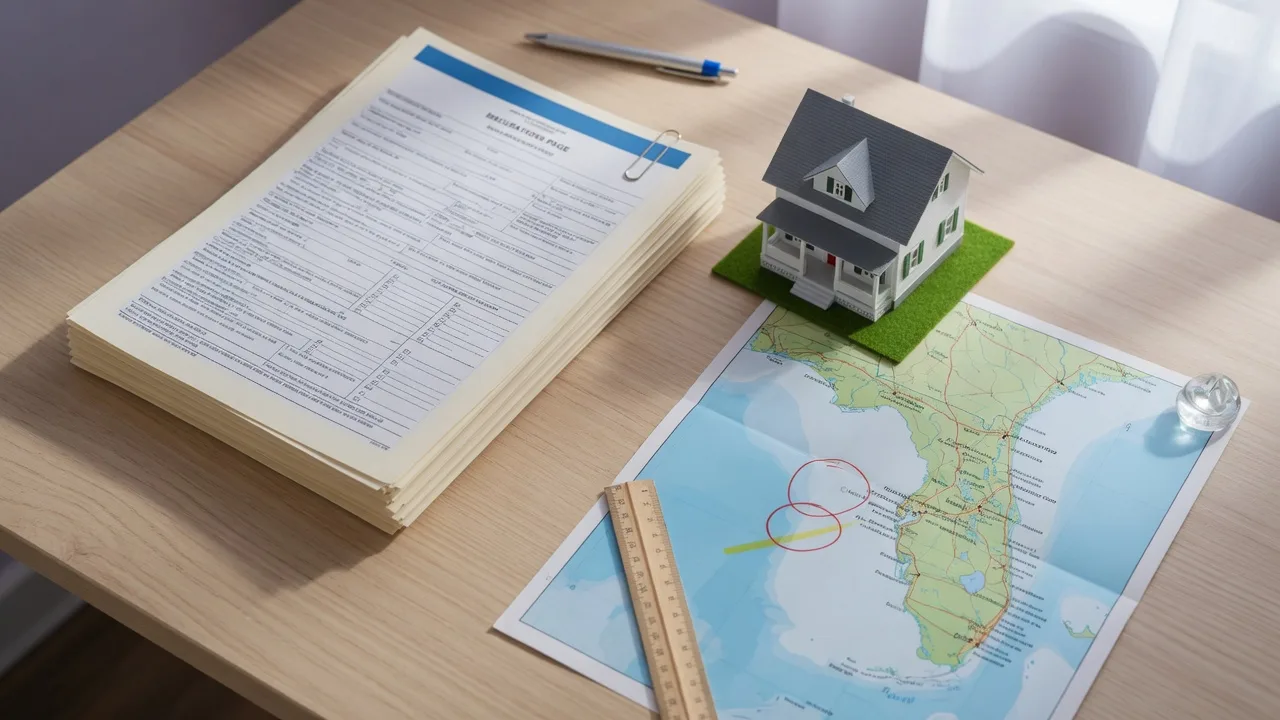
Two maps describe your home, and they answer different questions. An evacuation zone tracks storm surge, the water a hurricane pushes onshore, and the county uses these zones to order who leaves first. A flood zone is a FEMA designation of flood risk from rain, surge, and drainage. Check both for yourself before any storm is named.
Palm Beach County's Office of Emergency Management has a Know Your Zone tool: enter an address and you will see the evacuation zone, nearby shelters, and storm surge notes. For flood zones, use the FEMA Flood Map Service Center or county property appraiser records. If the letters VE, AE, or X are new to you, my flood zones and flood insurance guide explains the designations I walk homeowners through each year.
Action item: look up both zones today, write them somewhere visible, and share them with your household.
Build a 72-Hour Supply Kit
Ready.gov, the federal preparedness site, suggests every household plan to be self-sufficient for at least three days, which is where the 72-hour kit comes from. Build it room by room:
- Kitchen and pantry: a gallon of water per person per day, a three-day supply of nonperishable food, and a manual can opener.
- Bathroom: paper products, hygiene basics, and a marked bag for prescriptions with doses and pharmacy numbers.
- Closets and storage: a flashlight with extra batteries, a NOAA weather radio, and a first aid kit.
- Desk or office: cash in small bills, a phone power bank, and a paper list of important numbers.
Pets get their own bag: a week of food and water, a carrier, and vet records, since some shelters accept pets and some cannot. If anyone relies on medical equipment, call the equipment company and your utility now about the medical customer list.
Action item: gather the basics into one bin this weekend and keep a short list of what is still missing.
Secure the Exterior of Your Home
During strong winds, the dangers outside are loose items: patio furniture, grills, potted plants, and trash cans. Walk the perimeter and picture each item in heavy wind; what looks harmless can become a projectile aimed at a window or roof. Do this pass while the forecast is calm:
- Windows and doors: test your storm shutters or impact glass now, note any panel that does not fit, and plan its storage.
- Yard and garden: trim branches back from the roofline, bring in hanging plants, and decide now which furniture moves indoors.
- Garage door: often the largest opening of the home; close it fully, check the tracks, and consider bracing if it is a wide panel.
- Roof: give the roofline a look and note any missing or loose shingles; a dry-weather repair beats a leak found in rain.
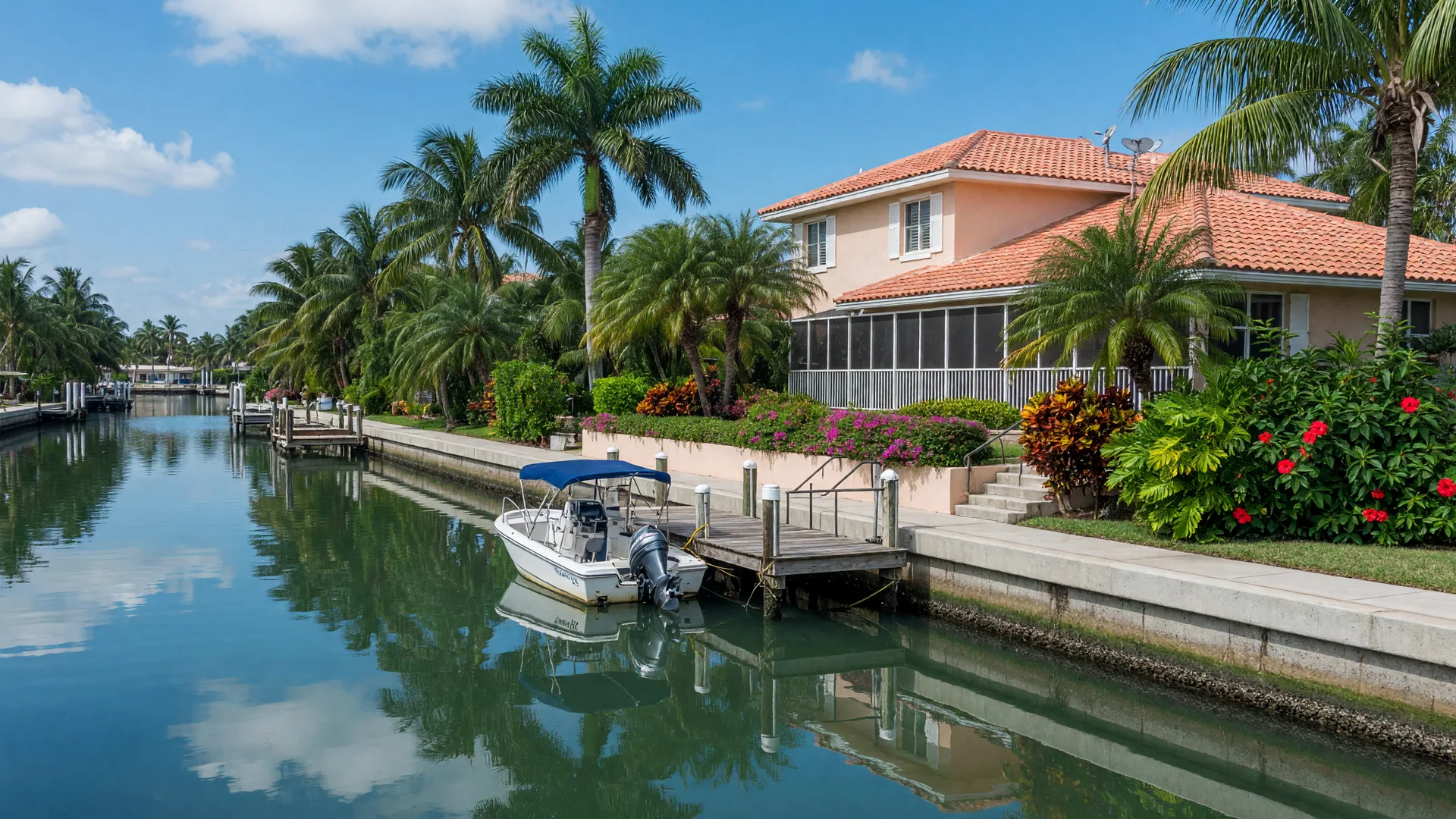
For waterfront homes, the seawall, dock lines, and any boat count too: check their condition now and know your marina boat plan. If a storm has you wondering about the home itself, my preparing your home for sale guide covers the same tidy-up thinking.
Action item: photograph the yard today, then finish the three easiest fixes this month.
Home Inventory and Important Documents
Documentation saves the most stress later, and it fits in one evening:
- Home inventory: record a slow video of every room, opening closets, then upload it to cloud storage and send a copy to a family member.
- Insurance: review your homeowners declaration page, note the claim number and deductible, and confirm your flood status; standard coverage does not pay for flood, so see my homeowners insurance guide for details.
- Grab bag: passports, licenses, birth certificates, the deed, and titles in one waterproof bag that never leaves the house without you.
Add a photo of your medicines and pharmacy numbers to the same bag.
Action item: record the home video today and set the document bag beside your kit.
Make a Communication Plan
Cell towers can be down and lines jammed after a storm, so write the plan before you need it:
- One out-of-area contact who lives outside the storm's path and can relay messages when local calls fail.
- One check-in habit, such as a daily OK text, with names and numbers written on paper, not only in your phone.
- A NOAA weather radio with batteries, kept with the kit; it broadcasts official alerts when mobile and internet drop.
- Power backups: a power bank and car chargers in both the kit and your vehicles.
Test the check-in once now, so when a watch is issued the plan is simply routine.
Action item: text your out-of-area contact the group list and agree on one simple word.
Power, Generators, and Fuel
If it feels like Palm Beach County loses power every season, that is not your imagination. A portable generator is a real comfort when used properly, and a danger when it is not:
- Never run a generator indoors, not in the garage or on the lanai. Carbon monoxide is odorless; run it outdoors, away from doors, windows, and vents, with the exhaust pointed away.
- Store fuel properly: approved containers in a ventilated place outside the living space, with stabilizer, and refill only when the engine is cool and off.
- Test the generator monthly, keep it dry under a cover if rain threatens, and check the batteries in your smoke and CO alarms.
You do not need the whole house running; the fridge, one fan, and phone chargers are enough, and a right-sized plan is easier to manage.
Action item: test the generator on the next dry day, buy the approved fuel can, and press-test the CO alarm.
Get Your Vehicle Ready
Vehicles get into trouble two ways: empty tanks when stations are down, and missing papers when you need them most. Take care of both now:
- Keep the tank half full or better for the season, and fill up the day the forecast turns; stations lose power and lines grow fast.
- Keep title, registration, and insurance in the glovebox, and add a small bag with water, a blanket, a flashlight, and a charger.
- Check the spare, tire pressure, and wipers in daylight before the season gets busy.
If you keep a boat, decide trailering versus haul-out before the forecast turns, and settle your ramp time now.
Action item: at your next fill-up, put a go bag in each trunk and make a half tank a habit.
When to Act: Official Sources and Evacuation Orders
The season's peak is not a single day but a window in which the National Hurricane Center issues advisories for systems that could approach the peninsula. When that happens:
- Watch official sources only: NHC advisories at nhc.noaa.gov, your local weather office, Palm Beach County Emergency Management, and the Florida Division of Emergency Management.
- Learn the vocabulary: a watch means conditions are possible within 48 hours and a warning within 36 hours, and each step closes a decision window.
- Evacuation orders are local: when the county orders your zone out, treat it as a direction; head toward a shelter or your planned destination before the traffic builds.
- After the storm, wait for the all clear from officials before returning; floodwater hides downed wires and changes the look of the street.
No forecast can tell you what a given storm will do, which is why this list exists: the work you finish now is the only real control, and a ready home lets you watch the advisories calmly.
Action item: bookmark the official pages and type your evacuation route into your map app when the forecast is calm.
Your Hurricane Prep Checklist at a Glance
Summarized by category, ready for the fridge or the family chat. Check items off as you finish.
| Area | Checklist Item |
|---|---|
| Supplies | Water, nonperishable food, can opener, medications, first aid, flashlight, batteries, cash, NOAA radio, and pet supplies in one kit. |
| Home Exterior | Shutters or impact glass tested, yard items secured, branches trimmed, garage door and roof checked, and boat lines reviewed for waterfront homes. |
| Documents | Video inventory, insurance and flood policy numbers, passports, titles, and licenses in one waterproof to-go bag. |
| Communications | Family and out-of-area contacts written, a check-in routine agreed, NOAA radio batteries fresh, and power banks close by. |
| Vehicles | Tanks half or better, title and registration in the glovebox, and a to-go bag with water, cash, and chargers in each car. |
| Power | Generator tested, fuel stored safely outdoors, CO alarms checked, and one family rule: never run the generator indoors. |
Understanding Hurricane Categories
The National Hurricane Center uses the Saffir-Simpson scale to describe wind. Remember that wind is only part of the risk, because storm surge and flooding can be destructive at any category:
| Category | Sustained Winds (mph) | Description |
|---|---|---|
| 1 | 74 to 95 | Some damage |
| 2 | 96 to 110 | Extensive damage |
| 3 | 111 to 129 | Devastating damage |
| 4 | 130 to 156 | Catastrophic damage |
| 5 | 157 or higher | Catastrophic damage |
Wind bands and labels follow the official Saffir-Simpson scale from the National Hurricane Center. The scale describes wind only; no table predicts any single storm.
You, Your Home, and a Calm Season
Take the checklist, share it with family, and cross items off one at a time. A home that is ready, a family with a plan, and a person who knows their zones is the combination that makes the season feel calm. For the rest of the year, my month-by-month Florida home maintenance checklist keeps your home in shape through every season, from the HVAC filter change to annual termite and roof inspections.
If hurricane season has you thinking about your home, whether it is insurance, a roof, or your next chapter, it deserves calm attention too. Reach me at (561) 236-9772, at rtownsendrealestate@gmail.com, or start at the contact page whenever you like, and browse my current listings with no obligation. Talk to you later.
Protect Your Home, Plan Your Move
Hurricane prep is about protecting what matters. When you are ready to talk about buying, selling, or simply understanding your home in Palm Beach County, I am here to help, no pressure and no obligation.
Rhonda Townsend, REALTOR® · A.I. Certified Agent™ · 1st Real Estate Solution Inc.
(561) 236-9772 ·
rtownsendrealestate@gmail.com
Frequently Asked Questions
Sources
Sources referenced in this article:
- • NOAA National Hurricane Center, Tropical Cyclone Climatology — Hurricane season facts and the September 10 peak
- • NOAA National Hurricane Center, Saffir-Simpson Hurricane Wind Scale — Official category definitions and wind speeds
- • NOAA, The Peak of the Hurricane Season: Why Now? — Why the season peaks in early September
- • Ready.gov (FEMA / DHS), Hurricanes — Official hurricane preparedness guidance
- • Palm Beach County Office of Emergency Management, Know Your Zone — Look up your evacuation zone by address
- • Florida Division of Emergency Management, Evacuation Orders — Official evacuation orders for Florida counties
Disclaimer: This article is provided for general educational and real estate information only. It is not legal, tax, financial, insurance, environmental, engineering, or property-inspection advice. Real estate requirements, costs, risks, policies, and market conditions vary by property and may change. Consult qualified professionals regarding your individual circumstances.