Key Takeaways
- Homeowners insurance in Florida covers dwelling, personal property, liability, and additional living expenses — but flood and windstorm coverage have important distinctions that every buyer should understand.
- Florida's insurance market is unique due to hurricane risk, reinsurance costs, and litigation trends. Premiums in Palm Beach County are higher than the national average, and rates vary significantly by ZIP code and distance to the coast.
- Flood insurance is required by lenders for homes in FEMA-designated Special Flood Hazard Areas (SFHAs), but even homes outside high-risk zones can benefit from a flood policy.
- Shopping for insurance before making an offer on a home can reveal cost surprises that affect your monthly payment. Starting early gives you time to compare quotes and understand coverage options.
- Working with a local Palm Beach County agent who knows which insurers are writing new policies in specific communities can save you time and help you budget accurately.
Florida homeowners insurance is different from what most buyers expect. Between hurricane wind coverage, flood insurance requirements, and rates that vary dramatically by ZIP code, understanding what you will pay for insurance is essential when budgeting for a home in Palm Beach County. This guide walks through the types of coverage, the factors that affect your premium, and the questions to ask before making an offer.
I'm Rhonda Townsend with 1st Real Estate Solution Inc., and I help buyers throughout Palm Beach County understand the full cost of homeownership including the insurance piece that surprises many newcomers. Whether you are looking at a waterfront property in Lake Clarke Shores, a single-family home in Wellington, or a downtown condo in West Palm Beach, insurance costs will factor into your monthly payment and your overall budget.
What Does Homeowners Insurance Cover in Florida?
A standard Florida homeowners insurance policy typically covers four main areas. Understanding each one helps you compare policies and decide on coverage limits.
Dwelling coverage pays to repair or rebuild the structure of your home if it is damaged by a covered event. This includes the walls, roof, floors, built-in appliances, and attached structures like a garage. Your lender will require dwelling coverage at least equal to the loan amount, and most policies are written at replacement cost, meaning they pay to rebuild at current prices without deducting for depreciation.
Personal property coverage protects your belongings — furniture, clothing, electronics, and other personal items — against theft or damage. You choose the coverage limit, typically calculated as a percentage of your dwelling coverage. Policies can be written on an actual cash value basis (subtracting depreciation) or replacement cost basis (paying what it costs to replace the item new).
Liability coverage protects you if someone is injured on your property or if you accidentally cause damage to someone else's property. This is the part of the policy that covers legal fees and medical bills. Most policies start at $100,000 in liability coverage, but higher limits are available.
Additional living expenses (ALE) coverage pays for temporary housing and living costs if your home is damaged by a covered event and you cannot live in it while it is being repaired. This is typically a percentage of the dwelling coverage limit and is especially important in Florida, where hurricane damage can leave a home uninhabitable for months.
Why Is Florida Homeowners Insurance Different?
Florida has the highest average homeowners insurance premiums in the country. Several factors contribute to this, and understanding them helps explain why the same home in another state would cost significantly less to insure.
Hurricane risk. Florida is the most hurricane-prone state in the United States. Every policy sold in the state must include windstorm coverage (hurricane coverage), and the deductible for wind damage is calculated separately — often as a percentage of the home's insured value rather than a flat dollar amount. A typical windstorm deductible is 2% to 5% of the dwelling coverage limit. On a $400,000 home, that is $8,000 to $20,000 out of pocket before insurance pays for wind damage.
Reinsurance costs. Insurance companies buy their own insurance, called reinsurance, to cover large losses from major hurricanes. After several active hurricane seasons, the cost of reinsurance has risen significantly, and those costs are passed down to policyholders. This is one of the primary reasons Florida rates have increased across the board in recent years.
Litigation trends. Florida has historically had a high volume of insurance-related lawsuits, particularly regarding roof claims and water damage. Insurers adjust their rates to account for legal defense costs and claim payouts. Recent legislative changes have aimed to reduce litigation, but the impact on rates takes time to materialize.
Aging housing stock. Many homes in Palm Beach County were built decades ago. Older roofs, outdated electrical systems, and aging plumbing are more expensive to insure. Insurers are increasingly requiring roof inspections before writing new policies and declining coverage on homes with roofs older than 15 to 20 years.
When Should You Shop for Homeowners Insurance?
The best time to shop for homeowners insurance is before you make an offer on a home. Here is why: insurance costs are a recurring monthly expense, and a higher-than-expected premium can push your total monthly housing payment beyond what you planned. Getting a quote on a specific property before you commit lets you factor that cost into your decision.
Start by contacting at least three licensed Florida insurance agents. Ask them to quote the specific property you are considering. Provide the property address, estimated replacement cost (your agent or a local builder can help estimate this), the year the home was built, and the age of the roof. Some agents can provide a quote within a few hours, though complex properties may take longer.
If you are working with a mortgage lender, they will require proof of insurance before closing. The policy must be effective on the closing date, so you need the binding documentation from the insurance company at least a week before closing. Starting the process early prevents last-minute surprises that could delay your closing.
What Factors Affect Your Homeowners Insurance Rate in Palm Beach County?
Several factors determine what you will pay for homeowners insurance,and they vary significantly across Palm Beach County communities. Understanding these factors helps you choose a home that fits your budget. One feature that can change your rate is a swimming pool,so it is worth understanding how insurers treat pools before you buy a pool home. My guide to buying a home with a pool covers the costs,safety requirements,and what to inspect.
- Location and distance to the coast: Homes closer to the Atlantic Ocean or Intracoastal Waterway carry higher wind and flood risk. A home in coastal West Palm Beach may have a significantly higher premium than a similar home farther inland in Wellington or Royal Palm Beach.
- Age and condition of the roof: Newer roofs with impact-resistant shingles qualify for discounts. Older roofs (15+ years) may require replacement before an insurer will write a policy. A roof built before updated Florida building codes may also carry a higher rate.
- Construction type: Concrete block construction typically costs less to insure than wood frame construction. Homes built after Florida's stricter building codes (post-2002) generally have better wind resistance and lower rates.
- Flood zone designation: Properties in FEMA-designated Special Flood Hazard Areas (SFHAs) require separate flood insurance. Even outside high-risk zones, flood insurance is available and recommended, especially for waterfront properties.
- Dwelling value and replacement cost: Higher home values mean higher coverage limits and higher premiums. Replacement cost (what it would cost to rebuild today) is usually higher than the market value of the home.
- Deductible choices: Higher deductibles lower your annual premium but mean you pay more out of pocket before coverage kicks in. Most policies offer deductibles ranging from $500 to $2,500 for non-wind claims, with separate percentage-based wind deductibles.
- Protection class and fire department proximity: Homes near a fire station with good fire protection ratings typically qualify for lower rates. Rural areas or homes far from a fire hydrant may face higher premiums.
Do You Need Flood Insurance in Palm Beach County?
Flood insurance is a separate policy from standard homeowners insurance in Florida. It is regulated by the National Flood Insurance Program (NFIP) through FEMA and is required by mortgage lenders if the property is in a FEMA-designated Special Flood Hazard Area.
For a detailed breakdown of FEMA flood zone designations, recent map updates that added thousands of Palm Beach County properties to high-risk zones, and estimated insurance costs, see my flood zones and flood insurance guide for Palm Beach County.
Even if your lender does not require flood insurance, it is worth considering. Almost 25% of flood claims come from properties outside high-risk flood zones. One heavy rain event or a storm that overwhelms drainage systems can cause significant water damage that a standard homeowners policy will not cover.
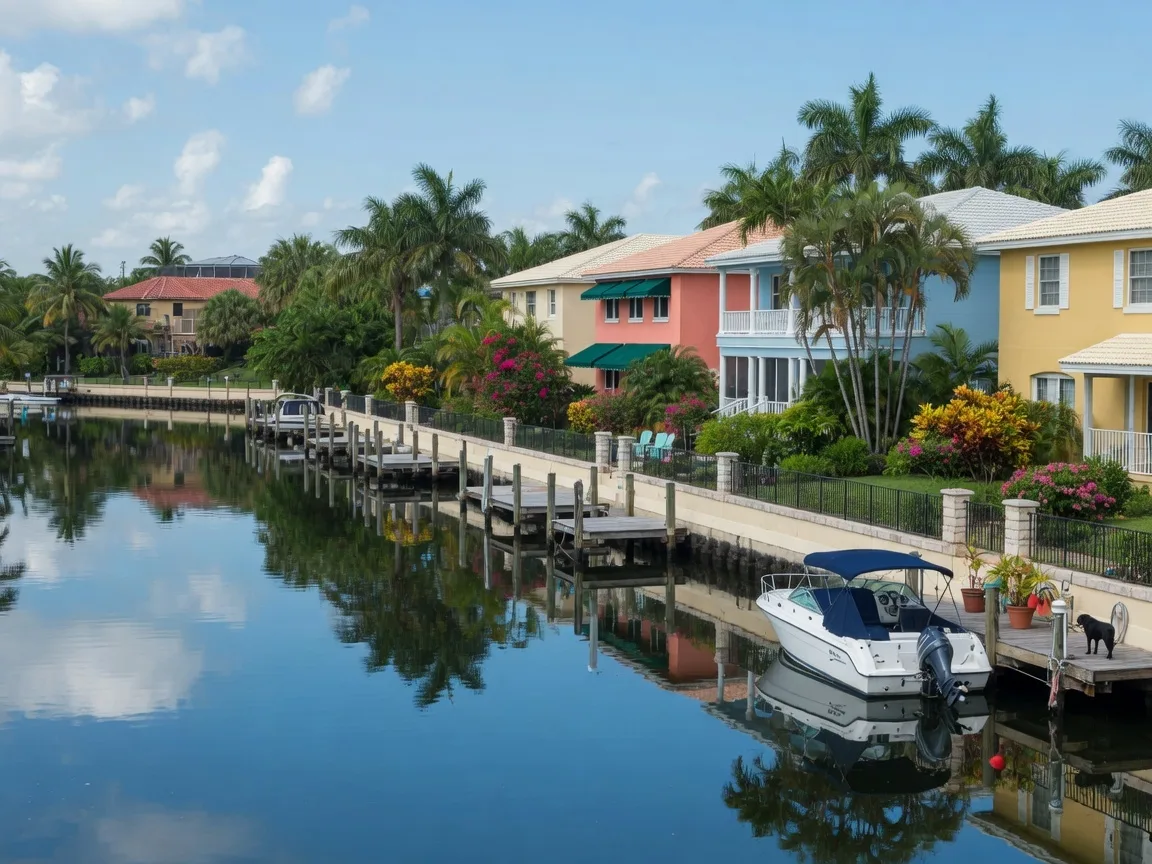
For waterfront properties along the Intracoastal Waterway, Lake Clarke Shores, or the Atlantic coast, flood insurance is almost always required. The cost depends on your flood zone designation, the elevation of the home, and the coverage amount. In Palm Beach County, the base elevation maps and flood determination are available through FEMA's Flood Map Service Center. Your real estate agent and insurance agent can help you understand the flood risk for a specific property.
Learn more about Florida insurance needs in this guide for new residents or contact me directly to discuss your specific situation.
How Can You Lower Your Homeowners Insurance Premium?
While Florida insurance rates are higher than most states, there are practical steps you can take to keep your premium as reasonable as possible.
Choose a newer home or one with a recent roof
Homes built after 2002 benefit from stronger building codes that require hurricane straps, impact-resistant windows, and reinforced roofing. A home with a roof less than 10 years old is much easier and cheaper to insure. If you are looking at older homes, factor in the cost of a roof replacement as part of your negotiation and budget.
Consider your location carefully
A home five miles inland can have a significantly lower premium than a comparable home one mile from the coast. Communities like Royal Palm Beach, Wellington, and the inland parts of West Palm Beach tend to have lower insurance costs than coastal areas.
Bundle policies when possible
Many insurers offer discounts when you bundle your homeowners and auto insurance. Ask about multi-policy discounts when shopping for coverage.
Install wind mitigation features
Florida law requires insurers to provide premium discounts for homes with approved wind mitigation features. These include hurricane shutters, impact-resistant windows and doors, reinforced roof-to-wall connections, and secondary water barriers on the roof. A licensed contractor can perform a wind mitigation inspection and provide a report that your insurance agent uses to apply credits.
Increase your deductible
If you have the savings to cover a higher out-of-pocket cost, raising your deductible can lower your annual premium significantly. The tradeoff is that you pay more before insurance kicks in, so make sure the deductible is an amount you could afford in an emergency.
Palm Beach County Insurance Checklist for Home Buyers
Insurance Checklist for Palm Beach County Home Buyers
- Get quotes before making an offer — Contact at least three licensed Florida insurance agents and get quotes on the specific property you are considering.
- Check the flood zone — Use FEMA's Flood Map Service Center to check the property's flood zone designation. Ask your agent about flood insurance costs.
- Ask about the roof age — Find out when the roof was installed and whether it meets current building code requirements. This affects both eligibility and price.
- Request wind mitigation information — Ask whether the home has documented wind mitigation features that qualify for insurance discounts.
- Understand the deductibles — Know the standard deductible and the separate windstorm deductible (typically 2% to 5% of dwelling coverage).
- Budget for annual increases — Florida insurance rates have been rising. Factor in potential future increases when calculating long-term affordability.
- Review the quote for binding restrictions — Some insurers stop writing new policies during active hurricane threats. Start early enough to avoid timing issues with your closing.
- Confirm the policy effective date — Your insurance must be in place before closing. Work with your agent and lender to coordinate the effective date.
If you already own a home in Florida, my insurance renewal review checklist walks through what to check at renewal time, including coverage limits, wind mitigation discounts, and flood insurance.
I work with buyers throughout Palm Beach County and can connect you with insurance professionals who know the local market. Contact Rhonda Townsend to discuss your home search, and I will share resources to help you budget for insurance and other homeownership costs.
For official information on Florida insurance requirements, visit the Florida Office of Insurance Regulation and the FEMA Flood Map Service Center to check flood zones for any property.
Ready to Start Your Home Search in Palm Beach County?
Understanding insurance costs is an important part of your home-buying budget. I can help you find properties with favorable insurance profiles and connect you with local insurance professionals who know the Palm Beach County market.
Rhonda Townsend, REALTOR® · A.I. Certified Agent™ · 1st Real Estate Solution Inc.
(561) 236-9772 ·
rtownsendrealestate@gmail.com
Frequently Asked Questions
Sources
Sources referenced in this article:
- • Florida Office of Insurance Regulation — Florida Office of Insurance Regulation
- • FEMA Flood Map Service Center — FEMA Flood Map Service Center
- • Citizens Property Insurance Corporation — Citizens Property Insurance Corporation
- • Palm Beach County Government — Palm Beach County
Disclaimer: This article is provided for general educational and real estate information only. It is not legal, tax, financial, insurance, environmental, engineering, or property-inspection advice. Real estate requirements, costs, risks, policies, and market conditions vary by property and may change. Consult qualified professionals regarding your individual circumstances.