Key Takeaways
- Florida’s year-round heat and humidity mean a few monthly tasks, especially changing the HVAC filter, protect your home more than any single annual project.
- Hurricane season runs June 1 through November 30, and the preparation that matters most happens in April and May, before the season begins.
- Termites, moisture, and pests are year-round concerns, so annual inspections and simple prevention are just as important as repairs.
- Consistent maintenance makes a home easier to insure, easier to sell, and cheaper to keep in the long run.
A Florida home needs different care than a home almost anywhere else, because the heat, humidity, and storm season never really stop. This month-by-month checklist gives you a simple rhythm: change the HVAC filter monthly, handle pest and termite prevention year-round, and do the biggest hurricane season preparation before June. Following it keeps your home safer, cheaper to run, and easier to sell.
I'm Rhonda Townsend with 1st Real Estate Solution Inc. After more than a dozen years helping Palm Beach County buyers and sellers, I can tell you that the condition of a home shows up directly in inspection reports, insurance quotes, and sale prices. This calendar is the kind of guidance I share with sellers before they list.
If a year-round schedule sounds like a lot, remember that most months take under an hour. The checklist is built to be sustainable: a few small tasks on a repeating loop, with the bigger projects reserved for the cooler months and the run-up to hurricane season. Start with this month's tasks and build from there.
Why Florida Homes Need a Year-Round Maintenance Rhythm
In Florida, air conditioning runs most of the year, humidity feeds mold and pests, and hurricane season brings wind and water. That combination means maintenance is not a spring and fall project. It is a steady rhythm of small tasks that prevent big, expensive problems.
The good news is that the most important task is also the cheapest: changing your HVAC filter. Because the system runs so often, filters clog fast, and a clogged filter makes the unit work harder, raises your electric bill, and can freeze the coil and damage the system. Checking it monthly and replacing it every 30 to 45 days protects your largest mechanical system with almost no effort.
What Should You Do Every Month?
A handful of tasks belong on every month's list. Change or clean the HVAC filter. Walk the exterior looking for signs of pests, moisture, or loose materials. Test your smoke and carbon monoxide detectors. Clear the condensate drain line so slime does not clog it and cause water damage. And keep mulch and vegetation a few inches away from the foundation and siding, which helps deter termites.
Many homeowners also run a monthly or quarterly pest service, because ants, cockroaches, mosquitoes, and termites are active all year. If you see mud tunnels on the foundation or unexplained wood damage, call a licensed pest professional right away; the longer termites work, the more expensive the fix.
Not handy? You do not need to be. The point of this calendar is to know what to ask for, not to do it all yourself. A licensed AC company changes filters and services the system, a pest professional handles the termite and insect work, a handyman covers the small fixes, and a roofer or inspector checks the roof. The calendar tells you when to book each one, which is the part most homeowners actually need.
January to April: Cool-Season Tasks
The cooler months are the best time for the projects that are harder in summer. Schedule the first professional HVAC tune-up of the year in March, and a termite inspection in late winter so you can treat before swarming peaks in spring. Trim palms and trees now, before birds begin nesting, and pressure-wash the driveway and pool deck while the weather is dry.
In April, have a professional inspect the roof before hurricane season, and gently rinse the outdoor condenser coil with the power off. Contractor schedules fill up as storm season approaches, so booking roof and tree work early means you are not waiting in line in May.
May and June: Hurricane Season Prep
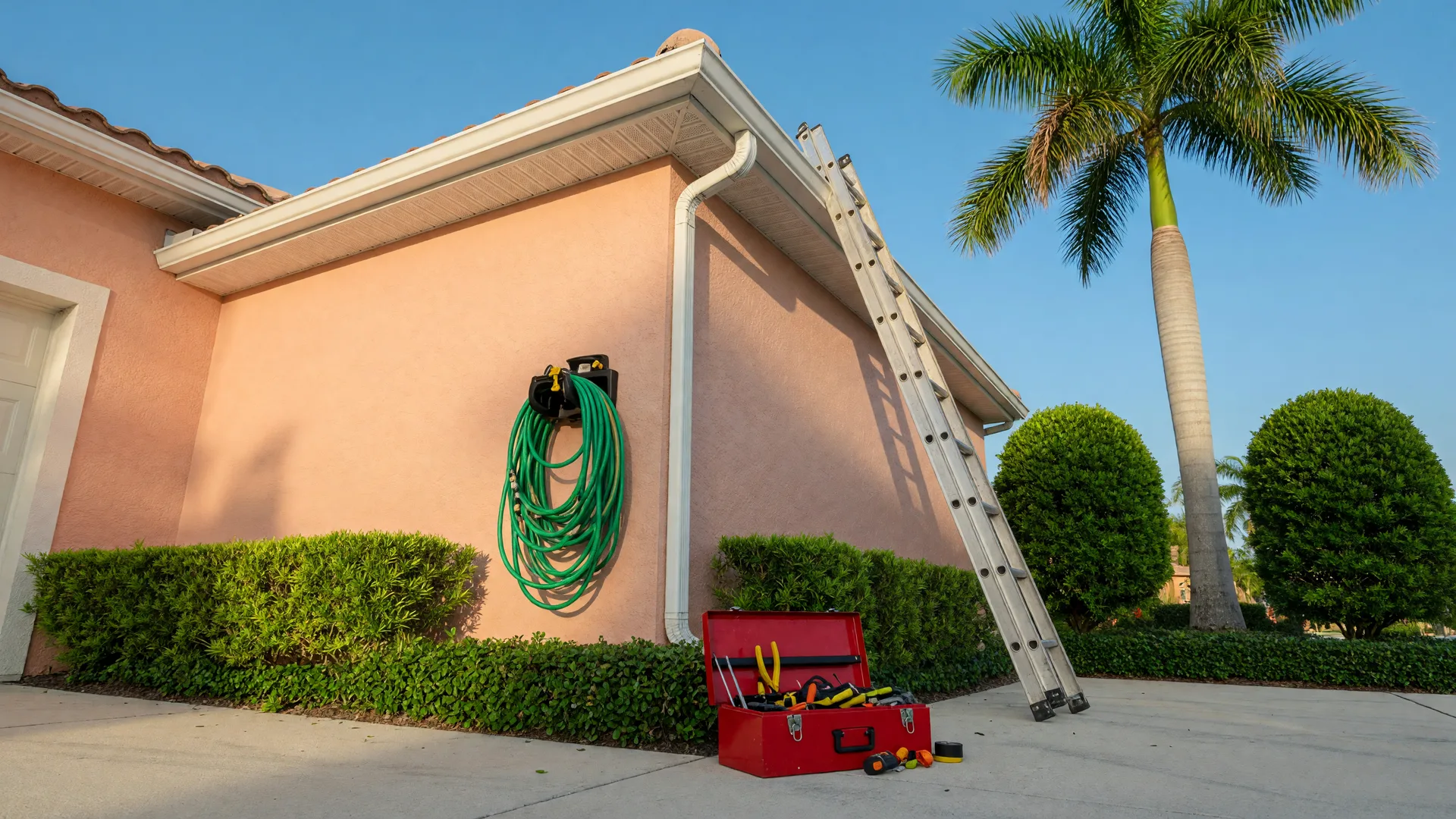
Hurricane season runs June 1 through November 30, and May is the month to get ready. Verify that shutters or impact glass are functional, test the generator under load, stock a disaster supply kit, and back up important documents digitally. Trim branches back from the roofline and clean the gutters so heavy rain has a clear path off the roof.
The hurricane season homeowner checklist I have published walks through the room-by-room details, and the Florida Division of Emergency Management publishes official preparation guidance as well. Reviewing your evacuation zone and keeping storm supplies stocked before June makes the whole season feel more manageable.
July to October: Peak Storm Season Checks
From July through October, the focus shifts to watching and protecting. Inspect the roof and soffits for wind-loosened nails or vents, and photograph the interior and exterior again after any storm for your insurance records. Keep gutters and downspouts clear, and stay current with the monthly filter change and pest service.
September is the statistical peak of the season, so treat the early fall as a time to double-check supplies and your plan. Schedule the second HVAC tune-up of the year in October, drain the sediment from the water heater, and do exterior weatherproofing while temperatures are still mild.
Keeping current photos is more than a nice habit. If a storm damages your home, your insurer will ask for documentation of what you had before the claim. A short video walkthrough of each room, stored in the cloud and refreshed once a year, gives you that record in minutes and saves real stress later.
What Big-Ticket Systems Should You Watch?
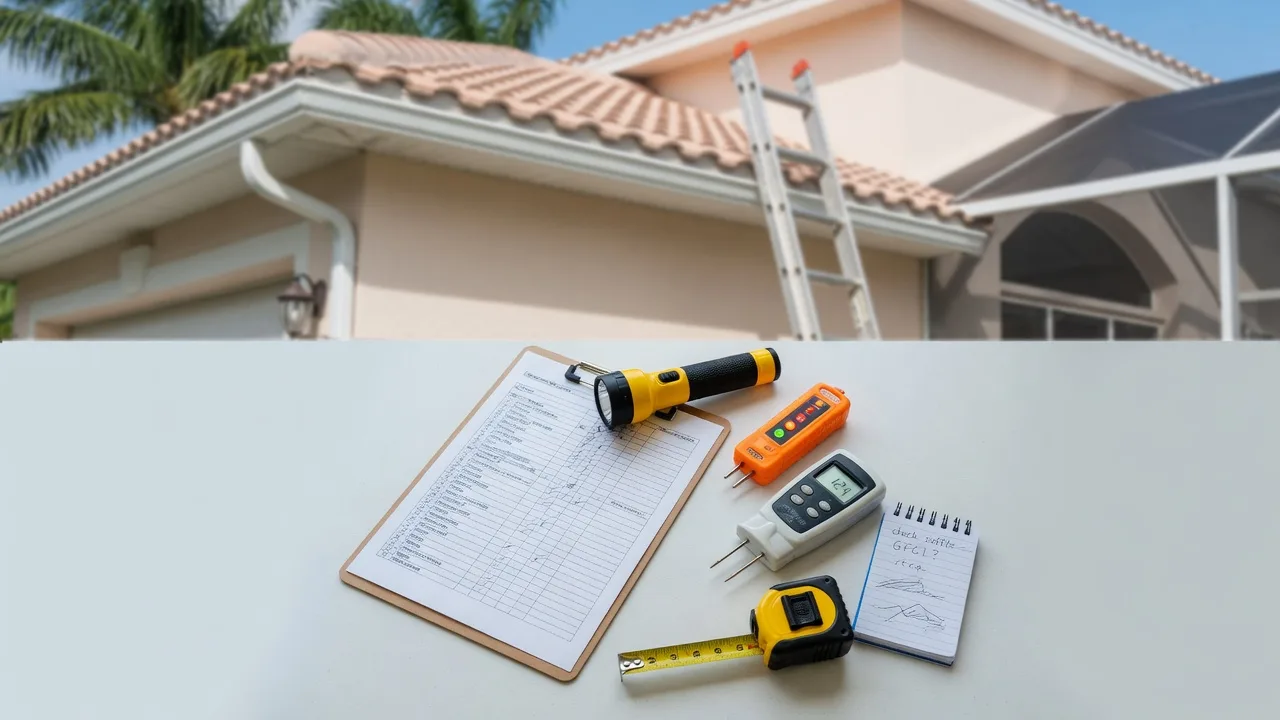
Beyond the monthly rhythm, a few systems deserve dedicated attention because they carry the biggest repair bills. The roof is first: in Florida it takes sun, heat, and wind, and most insurance carriers want to know its age and condition. Inspect it at least annually and after any significant storm, and document the condition with photos. My roof inspection and maintenance checklist goes deeper on wind mitigation reports and the state rules on roof age.
The air conditioning system is second. In addition to the monthly filter change, a professional tune-up twice a year catches worn parts before they fail in the middle of summer. The water heater is the third system to track; Florida water is hard on them, and flushing the sediment yearly extends their life. If you have a pool, the pump, filter, and chemistry are a routine of their own that protects a major outdoor investment.
November and December: Wrapping Up the Year
The season officially ends November 30, but keep your storm supplies in place until then. Clean gutters after leaf drop, secure outdoor items, and review your insurance coverage with your agent before the year ends.
In December, turn attention indoors: check caulking around windows and doors, run fixtures you rarely use, and test fire extinguishers and detectors. Then review the year's maintenance records and set reminders for the next one. A written record of maintenance is a quiet selling point, because it tells a future buyer the home was cared for.
The end of the year is also a natural time to review your coverage with an insurance agent and confirm your deductible and limits still fit the home you own. Policies and prices change, and an annual review keeps you from learning about gaps at the wrong moment.
How Maintenance Protects Your Home's Value
When a home is well maintained, it shows in the inspection report, in the insurance quote, and in the offers a seller receives. Buyers in Palm Beach County pay attention to the roof, the AC, the water heater, and any signs of moisture or pests, and those are exactly the systems this checklist protects.
The insurance angle matters too. Florida insurers look at roof age, electrical condition, and storm readiness when they quote, and a well-maintained home is easier to insure. That is one more way the monthly work pays for itself.
Keeping a simple record of what you did and when, even a notes app with dates and photos, makes all of this easier. When you go to sell, a maintenance log answers a buyer's questions before they are asked, and it is a quiet signal that the home was cared for through every season.
If you own a condominium or villa, some of these tasks fall to the association and its reserve fund, which is one reason reviewing association documents and HOA fees matters before you buy. For single-family homeowners, the responsibility is yours, and the payoff is real.
Maintenance also matters on the way out. When you decide to sell, buyers will inspect your home closely, and a well-maintained home clears that step with fewer surprises. If you are thinking about listing, my selling guide explains what to prioritize so the process goes smoothly.
You do not have to tackle every task at once. Start with the monthly filter change and one inspection a year, then build from there. If you are planning a move and want to know what your home is worth in its current condition, or what to fix before you list, I am happy to help you sort it out.
Keeping Your Home in Great Shape for Its Next Chapter
Well-maintained homes show it, and they sell on better terms. If you are thinking about selling, I can help you understand what a buyer and an inspector will look at first, and which maintenance items matter most before you list.
Rhonda Townsend, REALTOR® · A.I. Certified Agent™ · 1st Real Estate Solution Inc.
(561) 236-9772 ·
rtownsendrealestate@gmail.com
Frequently Asked Questions
Sources
Sources referenced in this article:
- • Florida Division of Emergency Management — Official hurricane season preparation guidance
- • FEMA Ready — Federal hurricane preparedness guidance
- • UF/IFAS Extension Palm Beach County — University of Florida home and landscape resources
Disclaimer: This article is provided for general educational and real estate information only. It is not legal, tax, financial, insurance, environmental, engineering, or property-inspection advice. Real estate requirements, costs, risks, policies, and market conditions vary by property and may change. Consult qualified professionals regarding your individual circumstances.