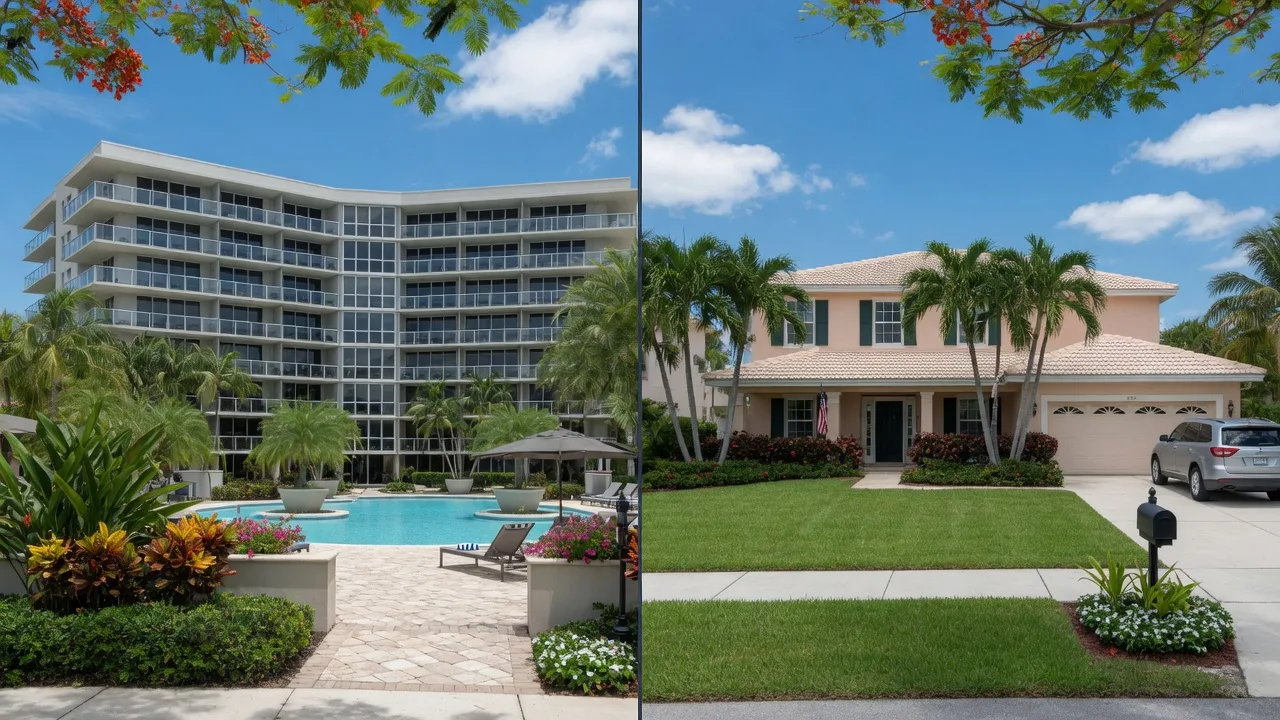
Key Takeaways
- Condos typically offer lower purchase prices and less maintenance responsibility but come with monthly HOA fees, shared walls, and community rules that affect what you can do with your property.
- Single-family homes provide more privacy, space, and control over the property, but require more hands-on maintenance and generally cost more to purchase and insure.
- HOA fees in Palm Beach County condo communities typically range from $200 to $800 per month and cover insurance, exterior maintenance, amenities, and common area upkeep.
- Your choice depends on your lifestyle priorities: hands-off living versus control over your space, budget, and how much time you want to spend on maintenance.
- Working with a local agent who understands both condo and single-family home markets can help you compare options based on realistic costs and tradeoffs in your target community.
Choosing between a condo and a single-family home is one of the most common decisions Palm Beach County home buyers face. Each option offers different tradeoffs in cost, maintenance, privacy, and lifestyle. This guide compares the key factors so you can make an informed choice based on your priorities.
I am Rhonda Townsend with 1st Real Estate Solution Inc., and I help buyers throughout Palm Beach County evaluate their housing options. Whether you are looking at a waterfront condo in West Palm Beach, a single-family home in Wellington, or a townhome in Jupiter, understanding the full picture helps you find the right fit.
What Are the Key Differences Between a Condo and a Single-Family Home?
At the most basic level, a single-family home is a standalone structure on its own piece of land. You own both the building and the land it sits on. A condo is an individual unit within a larger building or community. You own the interior of your unit and share ownership of common areas, land, and structures with other residents through a homeowners association.
This distinction affects almost everything about the experience of owning each type of property, from monthly costs to your ability to make changes to the property.
Quick Comparison: Condo vs. Single-Family Home
| Feature | Condo | Single-Family Home |
|---|---|---|
| Purchase price | Generally lower | Generally higher |
| Monthly HOA fees | $200 to $800+ | $0 to $300 (optional) |
| Exterior maintenance | Covered by HOA | Owner responsible |
| Privacy | Shared walls, neighbors close | Standalone, more separation |
| Outdoor space | Balcony or patio, shared grounds | Private yard |
| Control over changes | Limited by HOA rules | Full control (subject to zoning) |
| Amenities | Pool, gym, clubhouse often included | You build or join separately |
| Insurance | Less expensive (HO-6 policy) | More expensive (HO-3 policy) |
How Do Costs Compare Between Condos and Single-Family Homes?
The cost comparison goes beyond the purchase price. Here are the main cost categories to consider:
Purchase Price
In Palm Beach County, condos generally have a lower entry price than single-family homes in the same area. For example, a two-bedroom condo in a desirable community might start around $250,000 to $350,000, while a single-family home in the same neighborhood could start around $400,000 to $500,000. Waterfront properties and luxury condos can reach much higher price points.
Monthly HOA Fees
This is the most significant ongoing cost difference. Condo HOA fees in Palm Beach County typically range from $200 to $800 per month, depending on the age of the building, the amenities offered, and what the fee covers. These fees usually include:
- Master insurance policy for the building's exterior and common areas
- Exterior maintenance (roof, painting, landscaping)
- Common area utilities and upkeep
- Pool, gym, and clubhouse maintenance
- Trash removal and sometimes water/sewer
- Reserve fund contributions for future major repairs
Single-family homes in planned communities may have lower HOA fees (often $50 to $300 per month) that typically cover common area maintenance and community amenities, but not the home itself.
Insurance
Condo insurance (HO-6 policy) is generally less expensive than single-family home insurance (HO-3 policy) because the condo association's master policy covers the building's structure and exterior. However, you still need coverage for your unit's interior, personal belongings, and liability. For single-family homes, you insure the entire structure plus contents, which is more costly, especially with Florida's windstorm and flood insurance requirements.
Property Taxes
Property taxes are based on the assessed value of the property. Since condos typically have a lower assessed value than single-family homes, the tax bill is usually lower. However, Florida's homestead exemption applies to both property types for primary residences.
For a complete overview of costs when buying, read my first-time home buyer guide for Palm Beach County.
How Do Maintenance and Lifestyle Differences Compare?
Maintenance is one of the biggest lifestyle differentiators. In a condo, the association handles exterior maintenance, landscaping, roof repairs, and common area upkeep. If the air conditioning stops working inside your unit, that is typically your responsibility. If the roof needs replacing, that falls on the association.
In a single-family home, you are responsible for everything: landscaping, exterior painting, roof repairs, pest control, pool maintenance, and all interior systems. This gives you more control over quality and timing, but it also requires more time, effort, and money.
For many buyers who travel frequently, spend winters elsewhere, or simply prefer not to spend weekends on yard work and home maintenance, a condo is an attractive option. For buyers who want a yard, garden, or space for children and pets to play, a single-family home is often the better choice.
If you are considering downsizing, the lower maintenance of condo living is often a major draw. Many downsizing buyers specifically look for condos, villas, or townhomes in Wellington, West Palm Beach, and other communities that offer maintenance-free living without sacrificing quality.
What About Privacy, Space, and Outdoor Areas?
Single-family homes offer more privacy between you and your neighbors. You have your own yard, which provides space for outdoor activities, gardening, pets, and entertaining. You can also make changes to the property without needing approval from an association.
Condos involve shared walls, floors, and ceilings with neighbors. Your outdoor space is typically limited to a balcony, patio, or screened lanai. However, the tradeoff is access to community amenities such as pools, fitness centers, clubhouses, and sometimes walking trails or tennis courts that would be expensive to build and maintain on a single-family property.
The level of privacy in a condo depends heavily on the building's construction quality. Concrete and steel high-rise buildings offer better soundproofing than wood-frame garden-style condos. If you are considering a condo, it is worth asking about sound transmission between units.
Which Option Fits Your Lifestyle and Goals?
Here is a quick guide to which type of home might suit different situations:
- First-time buyers on a budget: Condos often offer a more affordable entry point into homeownership, with lower purchase prices and less immediate maintenance responsibility.
- Snowbirds and part-time residents: Condos provide lock-and-leave convenience, with exterior maintenance handled by the association and no yard to maintain while you are away.
- Growing families: Single-family homes typically offer more interior space, private yards, and the flexibility to modify the home as your needs change.
- Downsizers and empty nesters: Condos, villas, and townhomes offer the square footage you need without the maintenance burden of a larger property.
- Investors: Both options can work, but condos require careful review of association rental restrictions and financial health before purchasing as an investment.
- Waterfront buyers: Waterfront condos in West Palm Beach and Jupiter offer affordable access to water views and boating without the full cost and maintenance of a single-family waterfront home.
For a deeper look at different communities, visit the Palm Beach County neighborhoods page to explore options in each town.
What Questions Should You Ask Before Choosing?
Before deciding, here are the key questions to answer for yourself and for any property you are considering:
- What is my total monthly housing cost? Include mortgage, HOA fees, insurance, property taxes, and utilities for each option you are comparing.
- How much time and money am I willing to spend on maintenance? Be honest about whether you enjoy or resent yard work, home repairs, and exterior upkeep.
- How important is outdoor space? If a yard for pets, gardening, or outdoor entertaining is a priority, a single-family home may be the better fit.
- What are the association's financial health and reserve funds? For condos, review the most recent financial statements, reserve study, and meeting minutes to understand the association's condition and any planned special assessments.
- What are the association's rules and restrictions? Understand pet policies, rental restrictions, parking rules, and any limits on renovations or modifications.
- How long do I plan to stay? If you plan to stay for 5 to 10 years or more, a single-family home may build more long-term equity. If you plan to move sooner, a condo's lower costs may make more sense.
I am happy to walk through these questions with you based on your specific situation. Contact me to set up a conversation about your home buying goals.
If association living is on your radar, my guide to HOA fees and association documents in Palm Beach County walks through what to review before you commit to dues and community rules.
Have Questions About Your Next Move?
Whether you are leaning toward a condo, a single-family home, or you are not sure yet, I can help you explore your options and find the right fit for your lifestyle and budget.
Rhonda Townsend, REALTOR® · A.I. Certified Agent™ · 1st Real Estate Solution Inc.
(561) 236-9772 ·
rtownsendrealestate@gmail.com
Frequently Asked Questions
Sources
Sources referenced in this article:
- • Florida Department of Financial Services — Florida Insurance Consumer Information
- • Palm Beach County Property Appraiser — Property Tax and Assessment Records
Disclaimer: This article is provided for general educational and real estate information only. It is not legal, tax, financial, insurance, environmental, engineering, or property-inspection advice. Real estate requirements, costs, risks, policies, and market conditions vary by property and may change. Consult qualified professionals regarding your individual circumstances.