Key Takeaways
- Closing day is when ownership transfers and funds change hands, coordinated by the title or settlement agent who helps both sides sign the final documents.
- Buyers typically review the Closing Disclosure at least three business days before signing, so final costs and cash-to-close numbers stay clear.
- Down payments and closing costs usually move as certified or wired funds, so ask your closing agent exactly how delivery should happen before the meeting.
- The deed is recorded with the county after signing, and keys are typically handed over once funding completes, not always at the exact moment you put pen to paper.
- A final walkthrough the day before closing, plus a short checklist, gives buyers and sellers confidence heading into the table.
Closing day in Palm Beach County is the final step of a home sale, when ownership officially transfers and the buyer pays their remaining balance. What actually happens at the table, from the stack of documents to the handoff of keys, follows a predictable sequence that buyers and sellers can prepare for in advance. This guide walks through each stage so nothing feels like a surprise.
I'm Rhonda Townsend with 1st Real Estate Solution Inc., and I help buyers and sellers throughout Palm Beach County understand their options,and create a practical plan for their next move. Whether you are closing on your first home, selling a longtime house, or coordinating two transactions at once, knowing how closing day works reduces stress more than almost anything else. Let us walk through it together.
What Happens on Closing Day in Palm Beach County?
Closing day is when the buyer, the seller, and their agents finish the paperwork that moves ownership from one party to the other. A title company, settlement agent, or closing attorney typically coordinates the appointment, prepares the final documents, calculates the funds owed, and ensures the deed gets recorded with Palm Beach County after everything is signed.
The day itself usually involves separate signing sessions rather than one big meeting in the same room. The buyer typically signs loan documents, the closing disclosure, and title paperwork, while the seller signs the deed, the seller closing disclosure, and various affidavits. While you sign, funds are moving behind the scenes: your lender wires the loan amount, you provide your down payment and closing costs, and the title company settles the balances due to everyone involved. Once funding clears and the deed is recorded, the transaction is complete andyou get the keys. The whole signing portion often takes less than an hour, but the funding and recording steps can extend the afternoon.
What Documents Do You Sign at Closing?
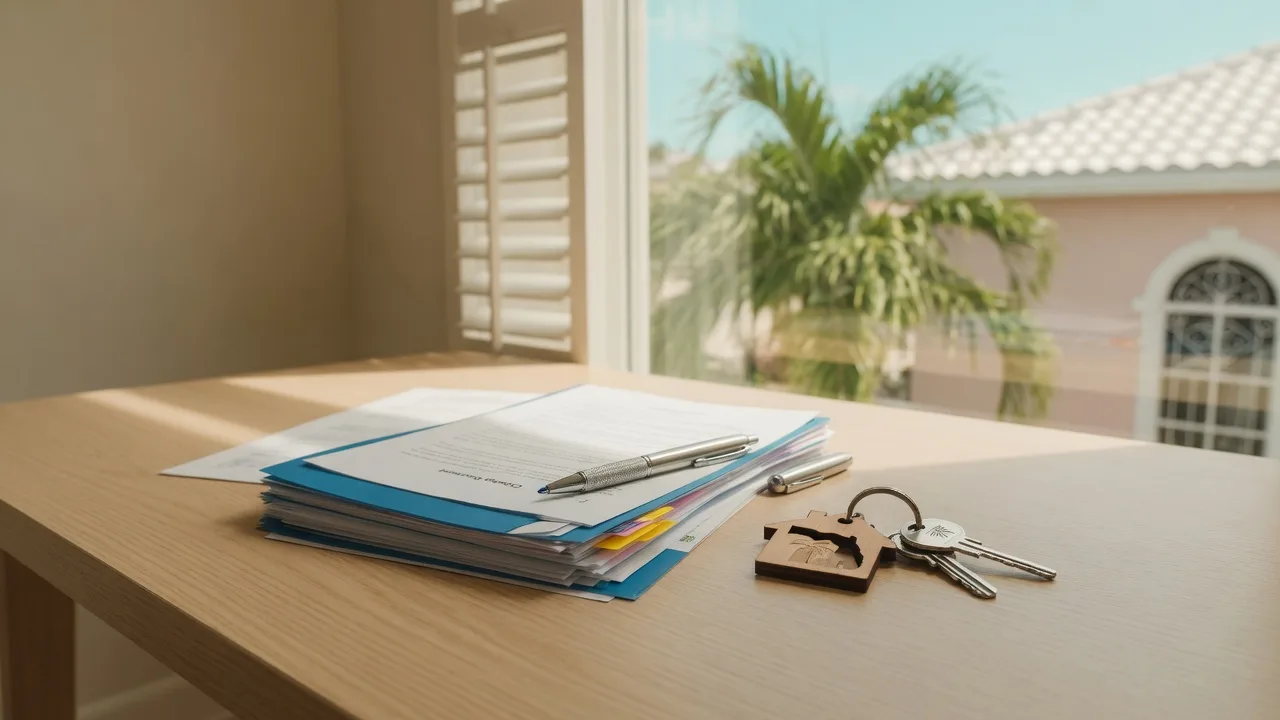
The exact stack of papers depends on whether you are buying with a loan or paying cash, but several documents show up in almost every Florida transaction. For buyers, the Closing Disclosure sums up your final loan terms, interest rate, monthly payment, closing costs, and cash needed to close, so it is worth reading carefully. The mortgage note and mortgage or deed of trust document the repayment promise and the lien against the property, while the deed is the document that actually transfers title from the seller to you. Owners title insurance policies protect against title problems that predate your purchase. Sellers typically sign the deed, a bill of sale for personal property, affidavits about the property's condition and occupancy, and the seller version of the closing disclosure for each side in the transaction. This summary is educational context only, not legal advice: you will have the chance to ask questions before you sign anything, and it is always wise to review documents with your closing agent well in advance, and with your own attorney or tax advisor when your situation is complex. State resources, such as those maintained by Florida Realtors, describe how the transaction process works in plain language for consumers.
Where Does the Money Go at Closing?
Money moves in a carefully ordered process on closing day. The buyer's down payment,and closing costs, along with the lender's loan proceeds, are collected by the title or settlement agent, who then pays off any existing mortgage on the seller's property, settles the real estate commissions agreed to in the listing contract, prorates property taxes,and association dues to the exact day of ownership transfer, and pays the recording fees,and other settlement charges. What remains after those obligations is the seller's net proceeds, which are typically disbursed after the deed records rather than handed over as cash at the table
Buyers usually deliver their funds as a cashier's check, a wire transfer, or in some cases an electronic funds transfer arranged in advance, because personal checks commonly are not accepted at closing for larger amounts. The title company gives clear wiring instructions; it is important to follow them exactly and to confirm them by phone if anything seems off, since wire fraud remains a real concern in real estate transactions. If you are budgeting, my guide to closing costs in Palm Beach County breaks down each fee, from lender charges to title insurance, so none of the numbers surprise you. A quick look at the summary sheet your closing agent sends a few days before closing tells you exactly what funds you need to bring and in what form
Do Buyers,and Sellers Close Together?
In many cases, no. Buyers,and sellers often sign at separate times, sometimes on different days entirely, with the title agent coordinating both sides. Sellers may close days earlier, signing the deed,and related documents, and leave the buyer's financing details to the buyer's own signing session. This is completely normal, and it means neither party needs to sit in the same room unless everyone prefers that. The title company sequences the documents so that everything aligns, and ownership does not change hands until all conditions are satisfied
Optionally, closings can happen remotely or electronically. Florida permits electronic signing for many real estate documents, and remote online notarization is available in some situations, which helps out-of-town buyers, military families, and sellers who have already moved. Your lender,and title company set the rules for your particular transaction, so if you cannot attend in person, bring it up early rather than assuming it is not possible. If you are buying from out of state, my guide to buying a home in Palm Beach County from out of state covers remote options, and the relocation guide walks through the broader move
What Should You Bring to Closing?
Your closing agent sends a specific checklist a few days before closing, but the basics rarely change. Bring a government-issued photo ID, your signed copy of the purchase contract, proof of homeowners insurance if you are getting a mortgage, and the exact funds required in the form your closing agent specified. Bring your bank wiring confirmation if you are wiring, your checkbook for any small incidental fees, anda notepad for questions. If you elected to do your final walkthrough beforehand, have the walkthrough report handy so any agreed repairs are fresh in your mind
Sellers typically need their ID, any keys, garage door openers, gate remotes, manuals, and access codes to hand over, the deed for the property if you have it, and documentation for any repairs or credits agreed to during negotiation. A little organization the week before closing, like gathering manuals,and clearing out the garage, makes the handoff smoother for everyone. The smoother the handoff, the sooner you can both move onto your next chapter
How Can You Make Closing Day Go Smoothly?
Most closing-day hiccups trace back to three things: funds, documents, and timing. Confirm your fund delivery method with the title company at least a few days ahead, review the numbers on your documents as soon as you receive them, and keep your calendar open for the afternoon of closing in case funding or recording runs later than planned. Do your final walkthrough within the day or two before closing, ideally checking that agreed repairs are done, that utilities are still on, andthat the home is in the condition you expect
If you are buying and selling at the same time, your two closings need to line up carefully, because your sale funds often become part of your purchase funds. That sequencing is exactly what my guide to selling and buying at the same time addresses, and it is a scenario where having one agent coordinating both sides helps more than anything. Whether you are a buyer or a seller, the full process is covered step by step in my buying guide and my selling guide, so you can see how closing day fits into the bigger picture
Once the deed records, you officially own your new home, and the community you choose becomes part of your daily life. If you are new to the area, exploring ahead of time helps you land somewhere you actually want to live. Start with the West Palm Beach neighborhood guide if downtown life appeals to you, and pair it with conversations with a local agent about the streets, homes, and lifestyle that fit you best
You do not need to memorize every line of your closing documents ahead of time, but knowing the shape of the day makes a genuine difference in how calm it feels. If you have questions about your own closing timeline or the steps leading up to it, reach out. I am happy to walk you through what to expect from your specific contract, at your pace, and without pressure.
Preparing for Closing Day?
Closing should feel organized rather than overwhelming. I can walk you through what to expect at every stage, from offer to keys, without pressure. Tell me about your timeline, and we can map out the steps together.
Rhonda Townsend, REALTOR® · A.I. Certified Agent™ · 1st Real Estate Solution Inc.
(561) 236-9772 ·
rtownsendrealestate@gmail.com
Frequently Asked Questions
Sources
Sources referenced in this article:
- • Florida Realtors — Florida Realtors official website
- • Palm Beach County Government — Palm Beach County official website
Disclaimer: This article is provided for general educational and real estate information only. It is not legal, tax, financial, insurance, environmental, engineering, or property-inspection advice. Real estate requirements, costs, risks, policies, and market conditions vary by property and may change. Consult qualified professionals regarding your individual circumstances.