Key Takeaways
- Your true monthly house payment includes principal, interest, property taxes, and homeowners insurance, often with mortgage insurance and an HOA fee on top.
- A practical planning benchmark is to set aside about 1 percent of your home's value per year for maintenance and repairs, plus a separate savings cushion.
- First-year costs also include prepaid items at closing, such as prorated property taxes, your first insurance premium, and an initial escrow deposit.
- Because Palm Beach County sits in a coastal and flood-prone area, budget specifically for homeowners insurance and possible flood insurance, which can vary a lot by home.
Your first-year homeownership budget in Palm Beach County goes well beyond your monthly mortgage payment. Beyond principal and interest, you will cover property taxes, homeowners insurance, maintenance and repairs, utilities, and likely a homeowners association fee, and your first year starts with prepaid costs at closing. This checklist breaks down each piece so there are no surprises in year one.
I'm Rhonda Townsend with United Realty Group, and helping buyers see the true cost of a home is part of the job I take seriously. Financing costs and insurance work differently in coastal Florida than they do in much of the country, so it pays to plan with the right numbers. Let's walk the full list.
What Costs Come in Your First Year as a Homeowner?
The Consumer Financial Protection Bureau notes that your total monthly house payment includes the mortgage principal and interest plus property taxes and homeowners insurance, and that mortgage insurance and homeowners association fees often get added on top. That folded-in total is what your loan documents show in the bottom line, and it is the number to budget against each month.
On top of that recurring payment, a first year brings maintenance, repairs, utilities, and a set of one-time prepaid costs at closing. Building the budget below treats every category as a line item so you can see the full, honest cost of owning a property in the communities you are considering, whether that is West Palm Beach, Wellington, or another part of Palm Beach County.
Property Taxes and Insurance: The Big Recurring Line Items
Property taxes are set by county and municipal millage rates, and they vary across Palm Beach County depending on where a home sits. In practice, on a home in a typical price range you are looking at property taxes as one of the more significant recurring monthly items, and most lenders collect them into your escrow account. It is worth keeping an eye on the escrow amount, because property tax assessments can shift and your lender will adjust the monthly figure to match.
Homeowners insurance is the other big one, and coastal Florida is a higher-cost market for it. Your premium depends on your home's age, roof condition and age, construction type, and distance from the coast. Because so much of Palm Beach County is near water, also ask whether flood insurance is required or worth carrying. The official flood map resource can show you a property's flood zone, and your insurer can quote both coverages so the number is real rather than a guess.
What drives your homeowners insurance premium in coastal Palm Beach County?
Your premium is shaped by a handful of concrete factors: the age and condition of your roof, the age and construction type of the home, how close it sits to the coast, your wind-mitigation features such as hurricane shutters or impact-resistant glass, and your claims history. Insurers in Florida weigh these heavily, which is why a newer roof with a wind-mitigation inspection can lower a premium noticeably. It is also why comparing a few quotes, rather than taking the first one, often saves real money in your first year.
Maintenance and Repairs: Plan the 1 Percent Rule
It also helps to know where that maintenance money tends to go in South Florida. Air conditioning runs near year-round and gets heavy use in summer, so the system and its tune-ups are a regular expense. Roofs take a beating from sun, wind, and rain, and older roofs can lead to higher insurance premiums before they ever leak. Appliances, water heaters, and the occasional pest or moisture issue round out the common items. Knowing these likely costs lets you save toward them instead of reacting to them.
A widely used planning benchmark is to set aside about 1 percent of your home's value per year for maintenance and repairs. On a $400,000 home, that is roughly $4,000 a year, or about $333 a month. It is not a bill that arrives every month, but roofs, air conditioning, and appliances do not wait, and coastal heat and humidity put extra wear on systems.
In your first year, you may also want a cushion beyond the routine 1 percent in case a major item needs attention shortly after you move in. A home inspection before purchase helps you flag what is new and what is near the end of its life, so you can budget accordingly and negotiate with eyes open.
Utilities, Services, and Homeowners Association Fees
Utilities in Florida carry their own rhythm, with air conditioning driving electricity bills higher in the summer months. Water, sewer, trash, and internet are recurring basics, and the total can be several hundred dollars a month depending on your home's size and cooling habits. Budgeting the high-season figure rather than the annual average keeps you comfortable in August.
If you buy in a community with a homeowners association, add its fee to your monthly picture, and confirm exactly what it covers, such as exterior maintenance, common areas, or amenities. The association budget and documents are shared as part of the purchase, so review them before closing rather than after. State and county governments publish local property tax information you can look up for any specific address.
Budgeting for air conditioning and seasonal energy
In Palm Beach County, electricity is one of the more variable monthly costs because air conditioning runs hardest between roughly May and September. Planning your utility budget around the higher summer figure rather than a yearly average keeps you comfortable in August without the shock of a high bill. Simple habits, like keeping the thermostat a few degrees higher in summer, using ceiling fans, and servicing the AC before the hot months, help control the number over time. A home with good insulation, shaded windows, or a newer efficient system will typically run less, which is worth factoring into how you compare homes.
Prepaid and Closing Costs Set Up Your First Year
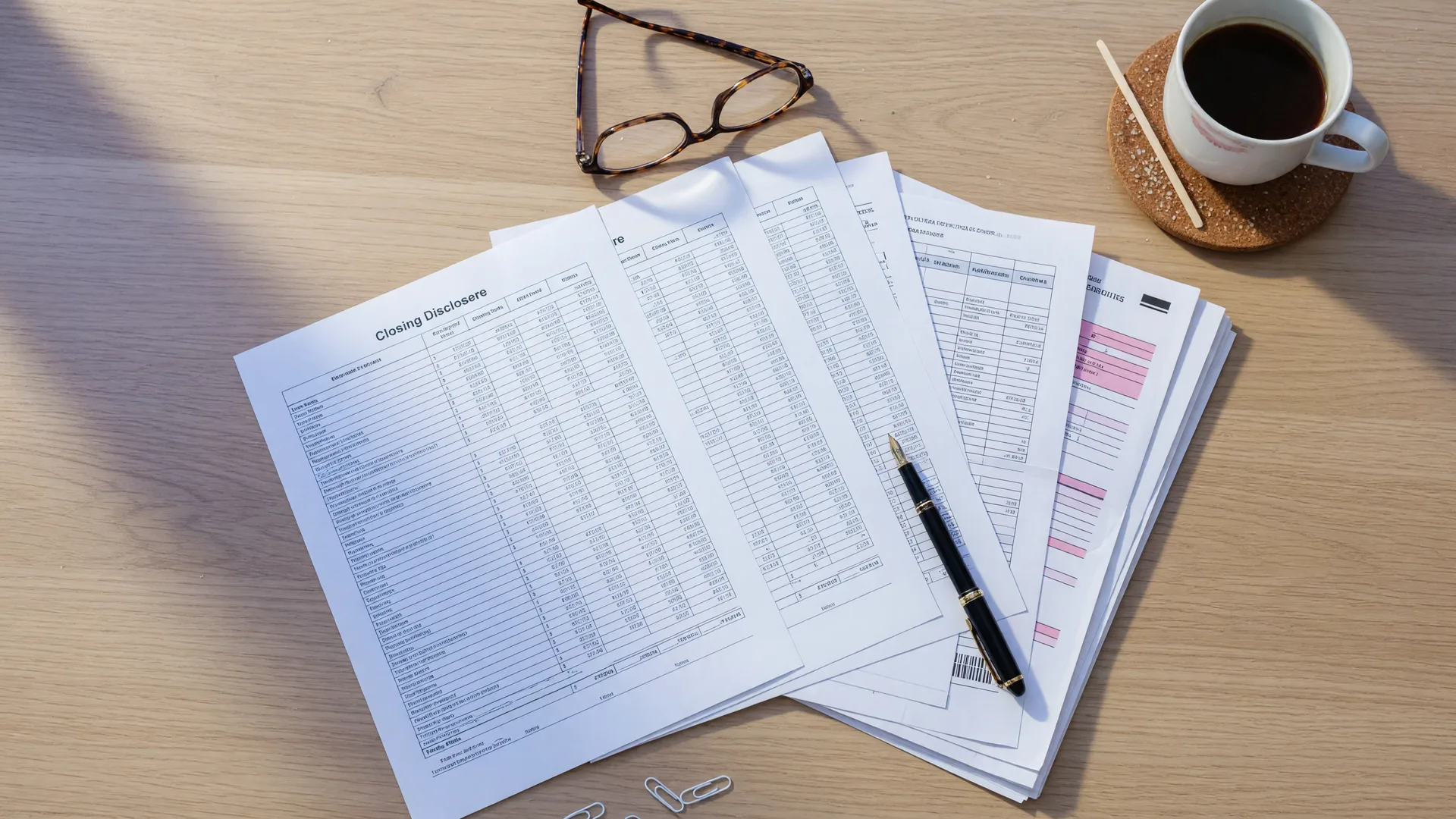
Your first year begins at closing, where you pay several prepaid and one-time items. These typically include prorated property taxes for the portion of the year you will own the home, your first year's homeowners insurance premium, and an initial deposit into the escrow account. The exact list appears on your Closing Disclosure, and the closing disclosure guide walks through how to read each section.
Total closing costs as a buyer can run a meaningful share of the loan amount, and closing costs in Palm Beach County covers what to expect line by line. Knowing these one-time numbers ahead of time means you are not surprised on closing day, and it keeps your cash-to-close within the budget you planned.
How to Build Your First-Year Homeownership Budget
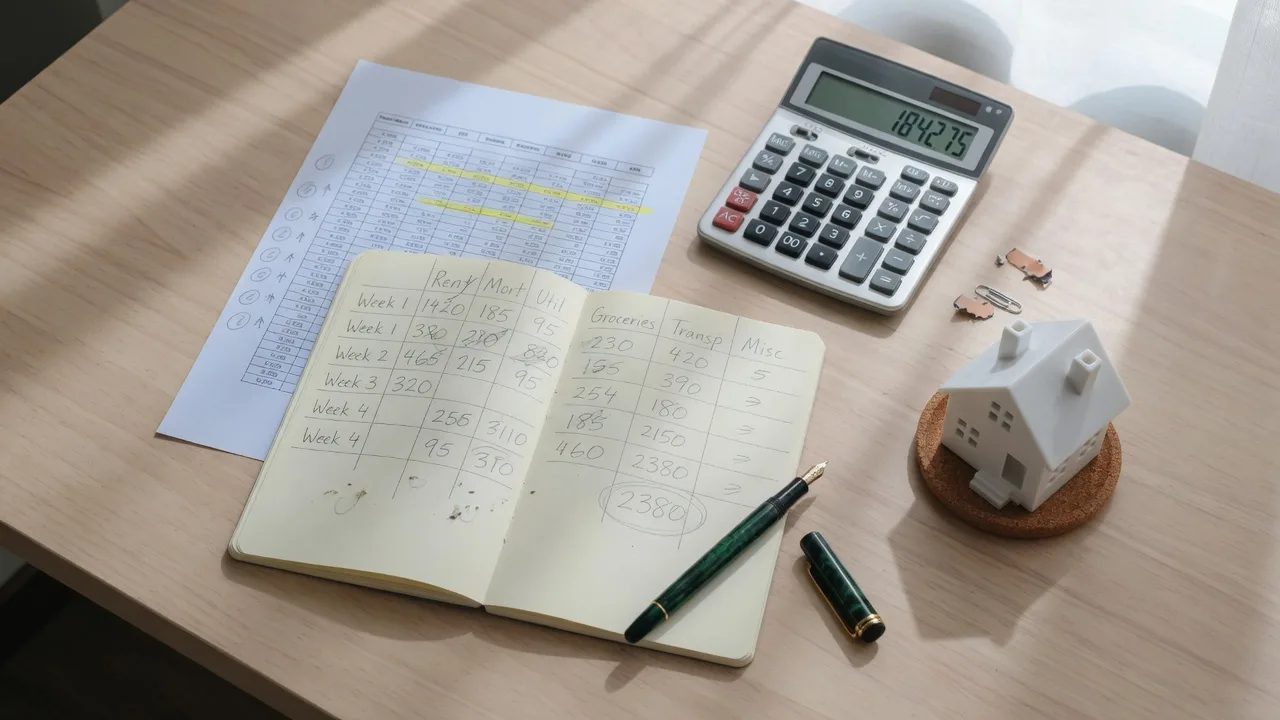
Build the budget in layers, starting with the fixed items you know and moving to the variable ones. Begin with your monthly principal and interest, then add property taxes, homeowners insurance, mortgage insurance if you have it, and any HOA fee. From there, add a maintenance set-aside and your monthly utilities, and you have a realistic monthly cost.
Most of these numbers are more predictable than they first appear. Property taxes and insurance are set line items you can quote before you commit, and your association fee is on the disclosure. The open variables are utilities in the hot months and the timing of maintenance, so those are the lines where you want headroom. Reviewing your budget once a year, especially when your insurance renews or your tax assessment updates, keeps your plan accurate as those numbers shift.
- Write down your total monthly payment from your pre-approval, including taxes and insurance escrow.
- Add an HOA or condo fee if the community has one, and confirm what it covers.
- Set aside the maintenance reserve, about 1 percent of the home's value per year.
- Budget utilities at the high-season figure, not the annual average.
- Keep a first-year cushion for prepaid closing items and unexpected repairs.
For help thinking through affordability before you buy, the how much home can I afford guide works through the rule-of-thumb numbers. And because every property is different, the best budget is one built on real numbers for a specific home. I can help you talk through the full picture for the homes and neighborhoods you are considering, so year one starts with fewer surprises.
Planning Your Move to a New Home?
A realistic first-year budget starts with good numbers on taxes, insurance, and what your home will actually cost to run. I can help you understand the full picture for a home in the neighborhoods you are considering, and connect you with lenders and insurers who know coastal Florida. No pressure, just a clear plan.
Rhonda Townsend, REALTOR® · A.I. Certified Agent™ · United Realty Group
(561) 236-9772 ·
rtownsendrealestate@gmail.com
Frequently Asked Questions
Sources
Sources referenced in this article:
- • Consumer Financial Protection Bureau — What your total monthly house payment includes
- • U.S. Census Bureau — Housing costs data from the American Community Survey
- • U.S. Department of Housing and Urban Development — HUD guide to closing costs for home buyers
- • Federal Emergency Management Agency — Official flood insurance and flood map resource
Disclaimer: This article is provided for general educational and real estate information only. It is not legal, tax, financial, insurance, environmental, engineering, or property-inspection advice. Real estate requirements, costs, risks, policies, and market conditions vary by property and may change. Consult qualified professionals regarding your individual circumstances.